
Tapputi-Belatekallim
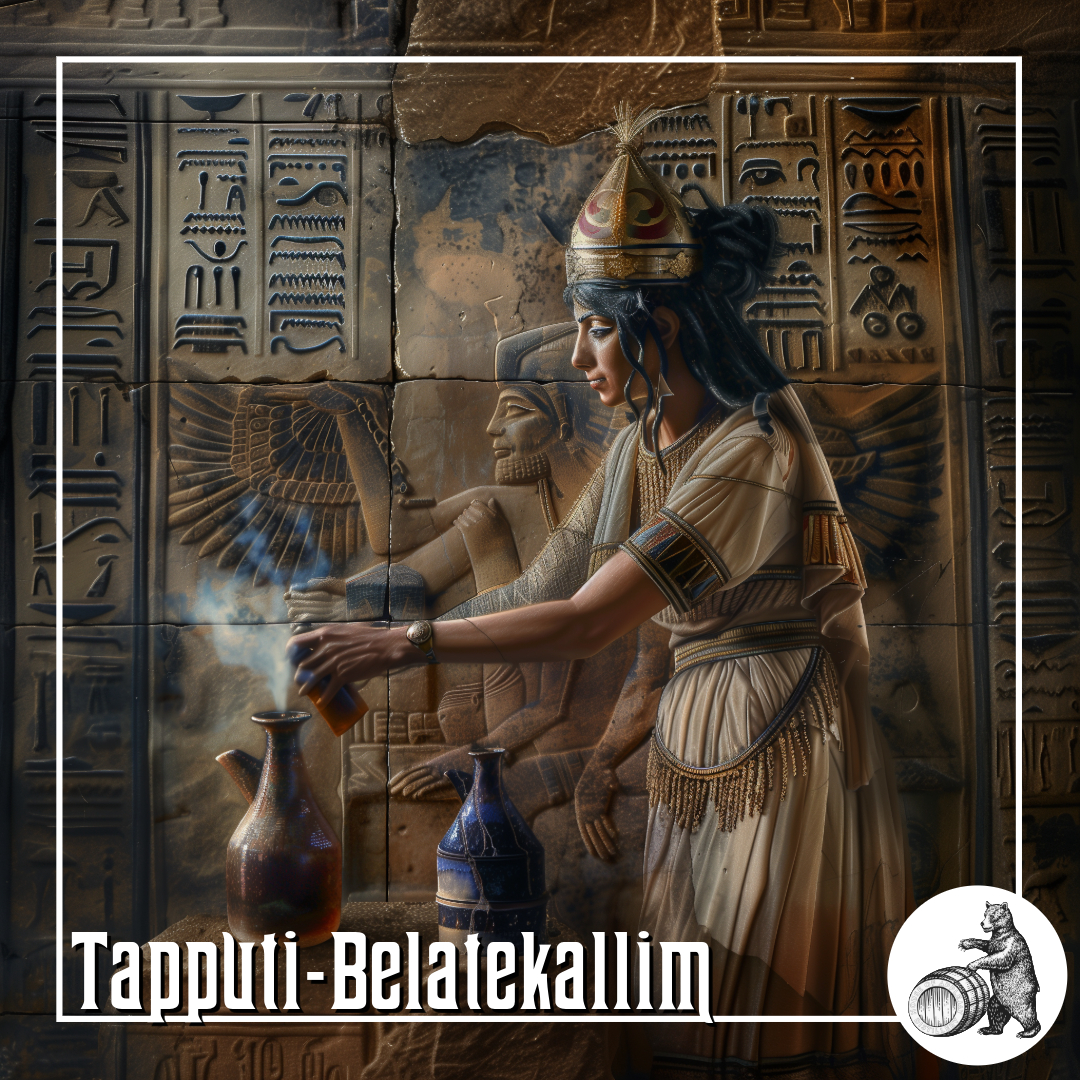
The World’s First Known Chemist & Distiller
Tapputi-Belatekallim stands as a remarkable figure in history, recognized as the world’s first known chemist. Her contributions to the field of perfumery and distillation during the 2nd millennium BCE in Babylonian Mesopotamia highlight her expertise and innovation in an era where scientific knowledge was in its nascent stages.
A Pioneer in Perfumery
Tapputi’s title, “Belatekallim,” translates to “overseer of the palace,” indicating her high status and the trust placed in her skills. She worked in the royal palace, where she was responsible for producing perfumes for the king and his court. The records inscribed on cuneiform tablets describe her as using a sophisticated method of extraction and distillation, involving flowers, oils, and other aromatics.
The Art of Distillation
What sets Tapputi apart is her pioneering use of distillation, a process that would become fundamental in the production of not only perfumes but also alcoholic beverages and medicinal tinctures. Her techniques included using solvents like water and other substances, along with apparatus that allowed her to distill the aromatic components. This method of distillation she used involved a rudimentary form of what we know today as the alembic still, showcasing her profound understanding of chemical processes.
Sources of Knowledge
Our knowledge about Tapputi-Belatekallim comes from ancient cuneiform tablets discovered in Mesopotamia, modern-day Iraq. These tablets, written in the Akkadian language, provide detailed accounts of her work and methods. The most significant of these tablets was found in the palace archives of the ancient city of Mari, an important cultural and economic center during Tapputi’s time. These texts offer invaluable insights into the early practices of perfumery and distillation, highlighting Tapputi’s role as a trailblazer in these fields.
A Legacy of Innovation
Tapputi’s contributions laid the groundwork for future advancements in chemistry and perfumery. Her meticulous methods and attention to detail paved the way for the development of more refined distillation techniques that would evolve over the centuries. Her work illustrates the advanced knowledge and skill present in ancient Mesopotamian society, a civilization often regarded as the cradle of scientific and cultural progress.
Recognition and Influence
The significance of Tapputi-Belatekallim extends beyond her immediate contributions. She embodies the often-overlooked role of women in the history of science and technology. Her achievements remind us that the pursuit of knowledge and innovation is universal, transcending gender and cultural boundaries.
In celebrating Tapputi-Belatekallim, we honor a true pioneer whose legacy continues to influence the fields of chemistry and distillation. Her story is an inspiring testament to the ingenuity and expertise of ancient civilizations and the timeless human drive to explore and create.
The Distilling Culture
BLOG
Embark on a global journey, and you’ll find that cultures possess tales that harken back to their ancient beginnings of distillation, brewing, and winemaking.
info@houseofapplejay.com
67 Fowler St, Bldg B, East Ellijay, GA 30540